
Building a pantry meal from what you have
Choose a base, texture and seasoning before buying extra ingredients.
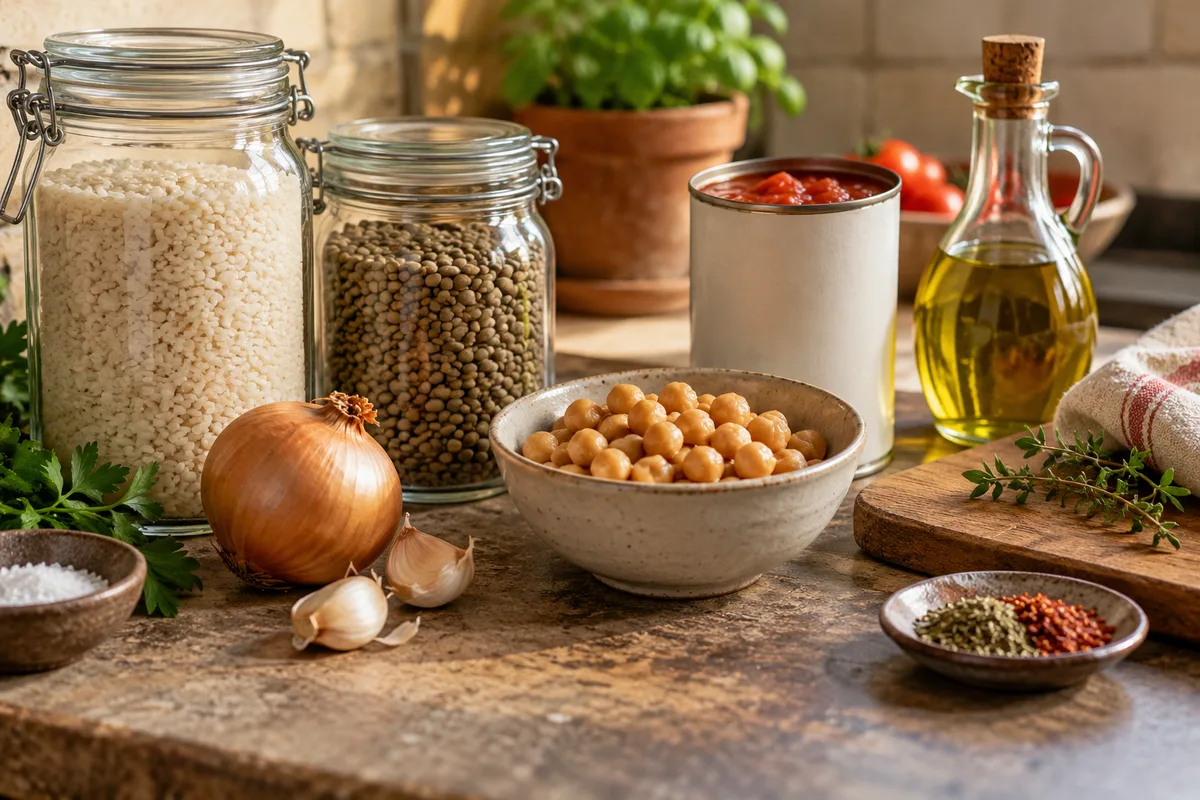
Make a usable inventory
Record quantities of dry goods, cans and opened foods. Distinguish net and drained weights, and check dates, packaging and storage directions. Availability alone does not make a product suitable for every use.
Choose a base and its preparation
Pasta works when sauce can cook alongside. Already cooked chickpeas suit salad or hummus. Dry red lentils need cooking but make a simmered dish with water, tomatoes and spices.
Add flavour simply
Onion, garlic and one spice can change a dish. Canned tomatoes suit sauce but do not automatically give a fresh bruschetta topping. Adjust water and salt to the product.
Decide the texture and amount
Choose whether the dish should remain chunky, coat pasta or become soup: this sets liquid and blending needs. Drain salad ingredients and calculate quantities by servings, not by packages you hope to finish.
Plan the next use
An opened product exceeding this meal’s needs should have another use compatible with storage instructions. The cost calculator measures the amount consumed; buying whole packages is a different expense.
Explore further
Plan equipment and serving
These notes complement the recipes: equipment and available space can prevent two dishes from cooking together.
Scroll the table horizontally on small screens; with a keyboard, focus it and use the arrow keys.
| Recipe | Total including waiting | Waiting included | Equipment to prepare | Planning detail |
|---|---|---|---|---|
| Simple tomato and red lentil dhal | 35 min | 0 min | Saucepan | Weigh lentils dry before rinsing; watch the bottom of the pan as the mixture thickens towards the end. |
| Chickpea, tomato and cucumber salad | 15 min | 0 min | Mixing bowl · Colander | Use cooked, drained chickpeas; do not treat the can’s total weight as chickpea weight. |