Choosing cookware for everyday recipes
Select vessels by usable surface, depth and the cooking task.
Finely grated carrots bound with eggs and flour, cooked as small patties of even thickness.
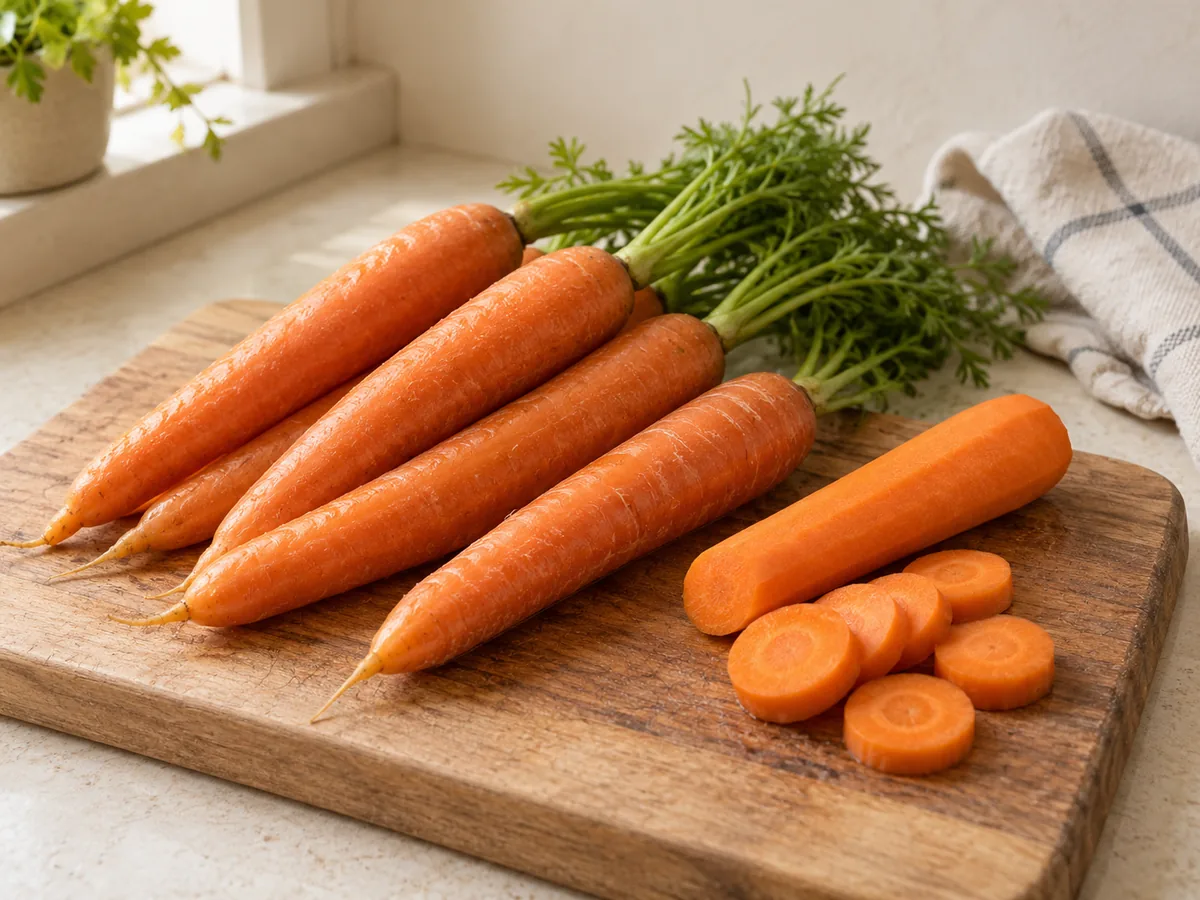
Wash and peel carrots if needed, then finely grate. Very finely chop the onion. Lightly squeeze unusually wet carrots in a clean cloth or sieve.
Beat the eggs in a bowl. Add flour, cumin if wanted, a little salt and pepper, then carrots and onion. Mix until a spoonful holds together.
Heat part of the oil over medium heat. Add small spoonfuls, leaving space, and flatten to roughly 1 cm. Cook for 3–4 minutes on each side, turning once the first side has set.
Continue in batches with the remaining oil. Check a first patty: carrots should be softened and the egg-and-flour mixture set in the centre. Lower the heat and cook longer if the surface browns too quickly. Serve hot.
Indicative times for the original quantities. Side dishes are prepared separately. Adjust cookware and batches when changing servings.
Thick strands take longer to soften. Small patties of equal thickness are easier to turn and assess than one pan-sized patty with a slower-cooking centre.
Squeeze the carrots before adding lots of flour. If needed, add a little extra flour and cook a test patty. Too much gives a dense result.
Four portions are side-dish portions, roughly three small patties each depending on size. Add other meal components separately. This version contains eggs and wheat; removing them needs a different formulation. More portions mean more batches.
The first side may not have set or the mixture may be wet. Wait for a firm base, use a wide spatula and make smaller patties.
Cooked carrots change moisture and texture. This recipe is for grated raw carrots; use a formulation suited to cooked carrots instead.
Select vessels by usable surface, depth and the cooking task.