
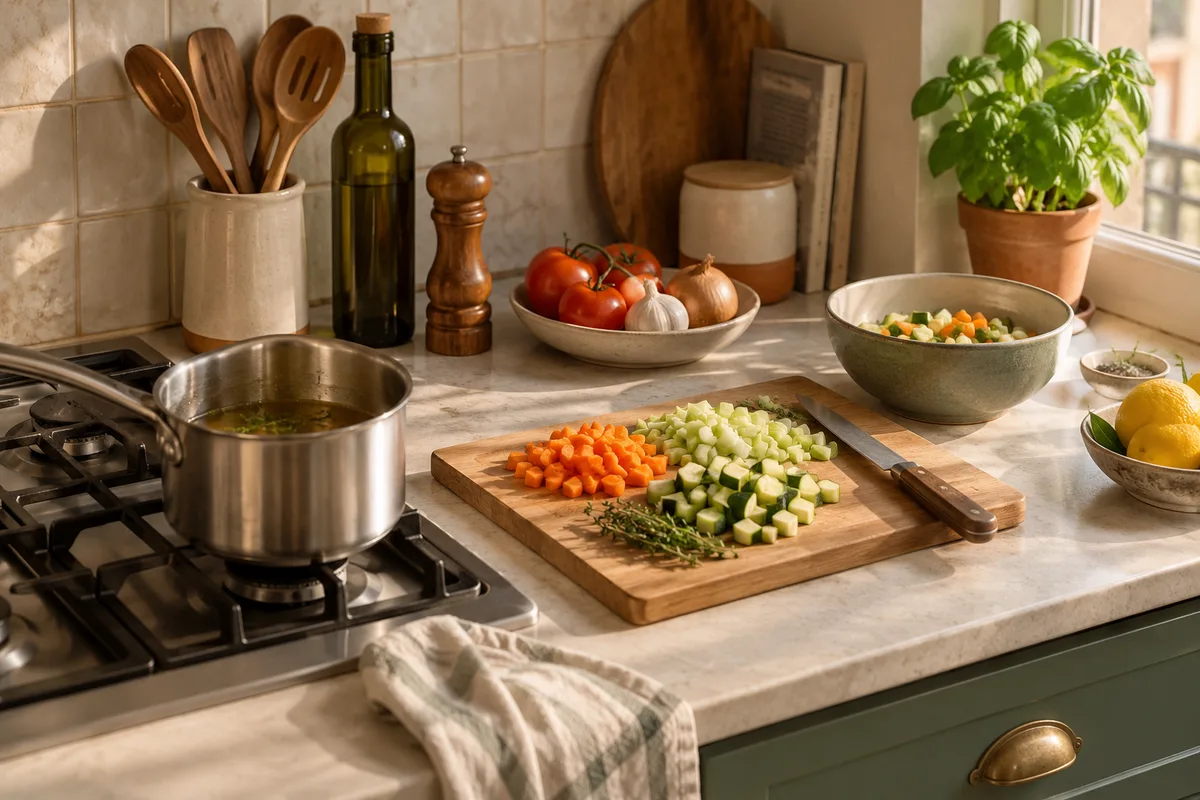
Cooking in a small space without cluttering the worktop
Organise ingredients, utensils and hot cookware when space is limited.
Select vessels by usable surface, depth and the cooking task.
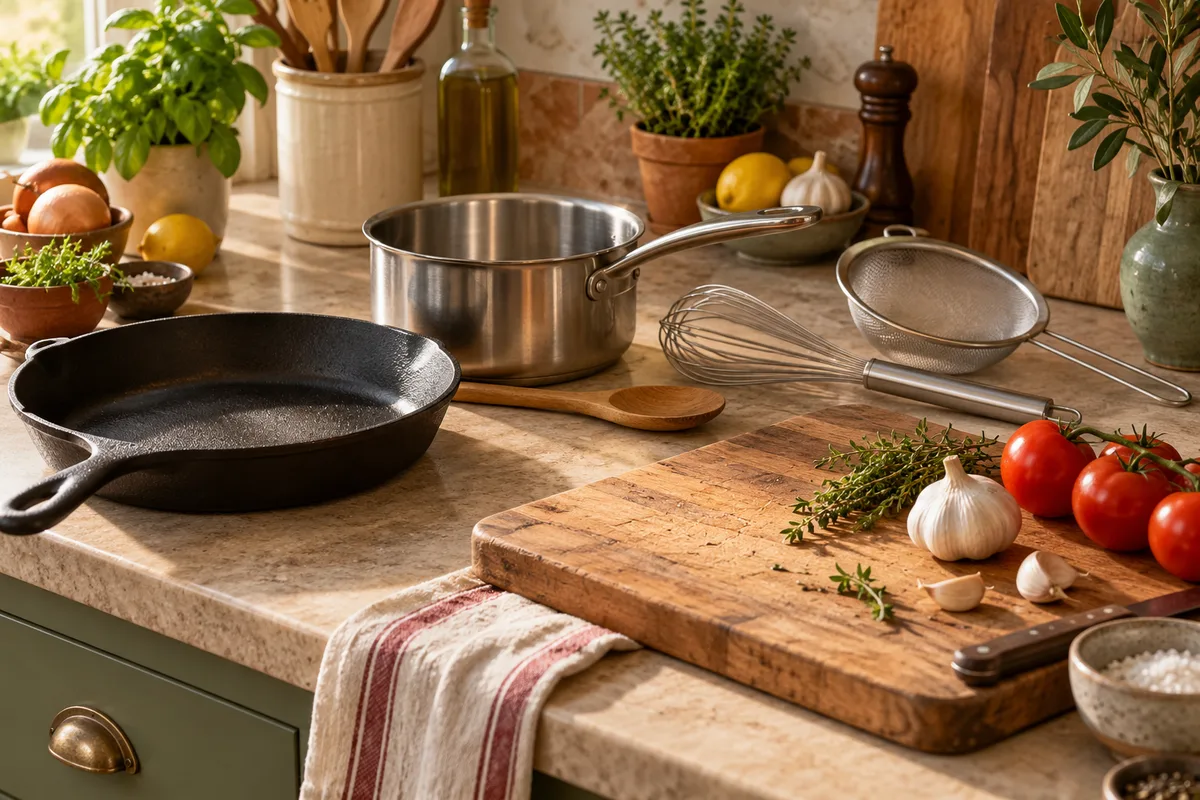
A pan suits browning and thin preparations. Mushrooms and potatoes need room. Consider the usable base rather than rim diameter; a small pan may need two batches.
Soup and lentils need capacity plus headroom. A brim-full saucepan is difficult to stir. A heavy base helps distribute heat in thickening dhal, but stirring and heat adjustment remain necessary.
Wide, shallow dishes evaporate differently from deep ones. Match the quantity and observe cooking. Check oven compatibility and follow manufacturer guidance on temperature changes.
A fine sieve holds red lentils, a fine grater helps carrots soften quickly and a wide spatula supports fragile patties. More accessories do not replace suitable cutting and cooking.
Keep a stick-blender head submerged in an appropriate vessel. A jug blender must be suitable for hot liquids and used within its capacity and steam instructions. A fork may be enough for rustic compote.
Organise ingredients, utensils and hot cookware when space is limited.
Outside dimensions, inside dimensions and published capacity are three different measures. Measure both containers at the same level. Sloping walls, a central tube or rounded corners limit simple models.
To keep a similar thickness in simple, solid shapes, compare usable areas: disc = π × diameter² ÷ 4; rectangle = length × width. The factor is target area ÷ reference area.
Geometric example: from 20 to 24 cm inside diameter, the factor is 24² ÷ 20² = 1.44. An ingredient amount of 200 g becomes 288 g arithmetically. The diameter ratio of 1.2 is insufficient.
Serving and area factors answer different questions: do not automatically multiply them together. The calculation sets neither fill level, cooking time, temperature nor yield. Capacity, height, material and rising still need checking.
Snapshot of the French Pyrex website dated 22 October 2026. References identify variants; these are neither purchase recommendations nor containers required by the recipes. Published capacity is not a calculated cylinder volume.
| Variant and reference | Outside | Inside | Published capacity | Manufacturer’s page |
|---|---|---|---|---|
| Round glass tin 812B000 | Ø 25 × H 4 cm | Ø 24 × H 3 cm | 1.1 L | Manufacturer’s page |
| Round glass tin 813B000 | Ø 28 × H 4 cm | Ø 27 × H 3 cm | 1.6 L | Manufacturer’s page |
| Round glass tin 814B000 | Ø 31 × H 4 cm | Ø 30 × H 3 cm | 1.9 L | Manufacturer’s page |
| Round glass tin 818B000 | Ø 26 × H 6 cm | Ø 24 × H 5 cm | 2.1 L | Manufacturer’s page |
| Glass loaf tin 835B000 | 28 × 12 × H 8 cm | 25 × 11 × H 7 cm | 1.5 L | Manufacturer’s page |
| Glass loaf tin 836B000 | 31 × 12 × H 8 cm | 28 × 11 × H 8 cm | 1.7 L | Manufacturer’s page |
These objects are not the six variants in the table. Photos do not establish dimensions or suitability for a recipe.
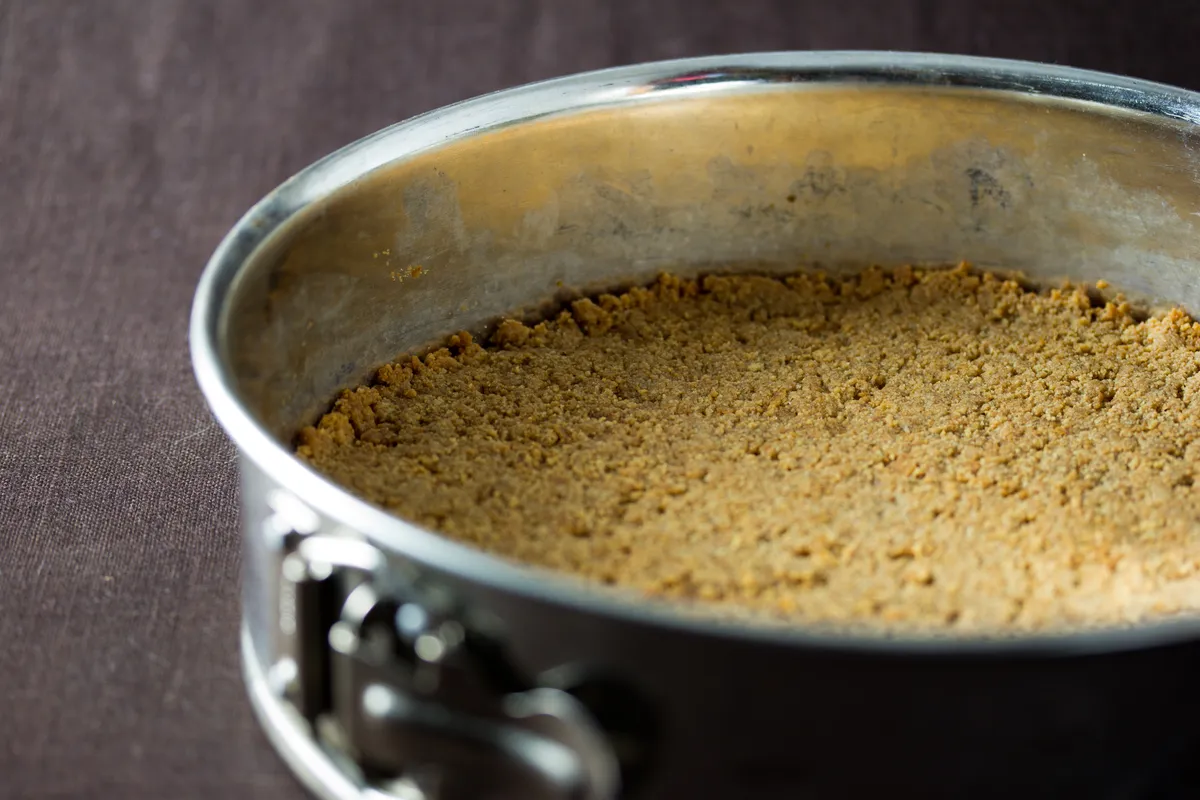
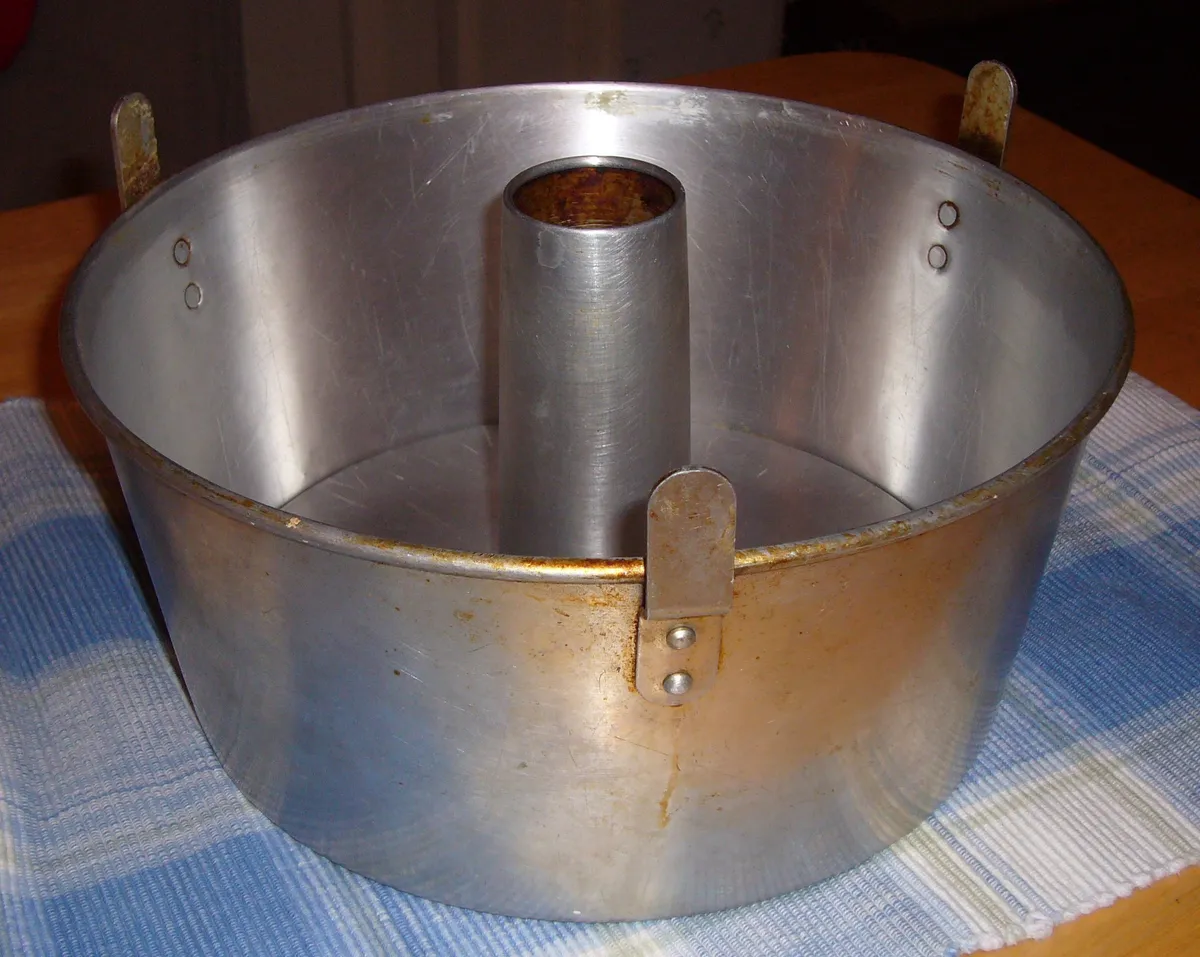
These notes complement the recipes: equipment and available space can prevent two dishes from cooking together.
Scroll the table horizontally on small screens; with a keyboard, focus it and use the arrow keys.
| Recipe | Total including waiting | Waiting included | Equipment to prepare | Planning detail |
|---|---|---|---|---|
| Carrot patties in a frying pan | 30 min | 0 min | Grater · Frying pan · Mixing bowl | Pan space determines the number of batches. Scaling up may require extra rounds; do not pile food up to make it fit. |
| Courgette and mozzarella bake | 50 min | 0 min | Baking dish · Oven · Frying pan | Mozzarella and courgettes release water. Drain the cheese and precook vegetables as directed; a deeper dish changes cooking behaviour. |

