Ingredients

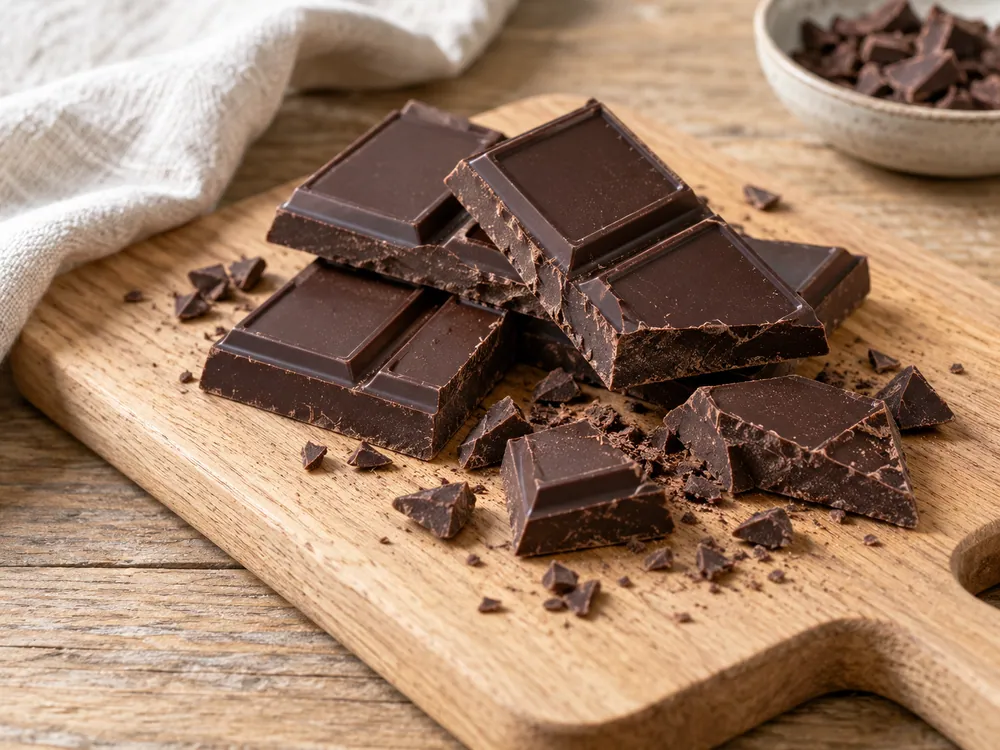
Chocolate: melting and texture

Chocolate contributes flavour and structure to mousse. Its mixing temperature matters as much as the bar chosen.

Chocolate: melting and texture
Illustrative image

Choosing the product

Compare bars using the minimum cocoa percentage and the sugars per 100 g in the nutrition table. Check the ingredients and any trace warnings if you need to avoid milk. The bar’s composition also affects how fluid it is when melted. DGCCRF · reading chocolate labels (in French)

Preparing and using it

Chop finely and warm gently in clean, dry equipment. Stir and let cool to lukewarm while still fluid before adding yolks. Prepare other components first.

Substitutions and adaptations

Cocoa powder cannot replace a bar weight for weight because composition differs. Milk chocolate changes sweetness and structure and may require new proportions.

Mistakes to avoid

Excess heat or unexpected water droplets can disrupt melting. Do not add burning-hot chocolate to yolks. Chilling will not smooth an already grainy mixture.
Frequently asked questions

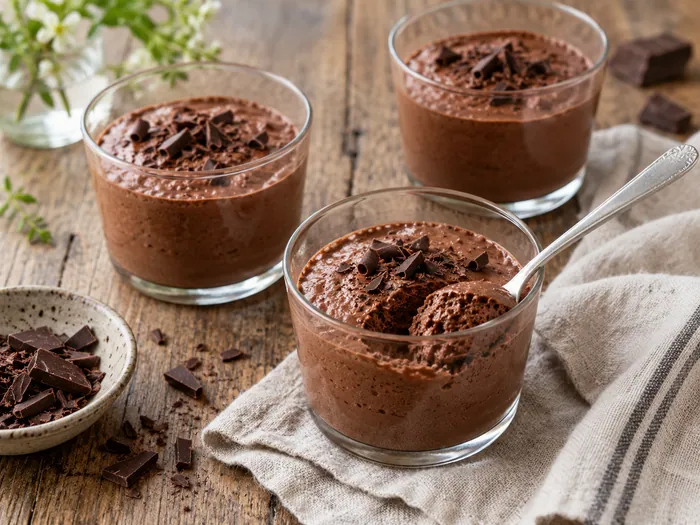
How can I avoid grains in mousse?

Keep chocolate fluid but lukewarm before adding yolks and whites. Too cold, it forms chunks; too hot, it harms the texture. Prepare other components before melting it.

Food composition · Ciqual 2025

Minerals and vitamins: choose the right reference

Anses average values per 100 g of edible food. Each entry describes a specific form, not an analysis of your product or recipe.

Cocoa percentage and use distinguish the entries, but do not describe every brand’s exact recipe.

On a small screen, scroll the table horizontally. With a keyboard, focus the table and use the arrow keys.

Minerals, in milligrams · per 100 g
Constituent and unitDark chocolate, about 50% cocoa, bar
Ciqual 31005
Dark chocolate, about 70% cocoa, eating bar
Ciqual 31074
Dark chocolate, 40% cocoa or more, baking bar
Ciqual 31085
Sodium (mg)10.285.36
Calcium (mg)406246
Magnesium (mg)100200130
Potassium (mg)490750300
Iron (mg)3.5114.35
Zinc (mg)231.3
Vitamins: check the units · per 100 g
Constituent and unitDark chocolate, about 50% cocoa, bar
Ciqual 31005
Dark chocolate, about 70% cocoa, eating bar
Ciqual 31074
Dark chocolate, 40% cocoa or more, baking bar
Ciqual 31085
Vitamin C (mg)< 0.1< 0.50.28
Total folates (DFE) (µg)Not reportedNot reportedNot reported

Compare these entries and two ingredient weights

Milligrams, micrograms and missing data

1 g = 1,000 mg; 1 mg = 1,000 µg. Folates use µg; minerals and vitamin C use mg. Check units before comparing numbers.

Vitamin B9 uses only total folates as dietary folate equivalents (DFE), code 56702. Missing data stays missing even if another folate field exists. Intrinsic folates and added folic acid do not replace this total.

“<” is a bound, “trace” is unquantified and “Not reported” means missing data. None is converted to zero. A published zero does not certify allergen absence. Values describe neither absorption nor individual requirements.

French source labels and Ciqual codes
  • Chocolat noir 50 % de cacao environ, tablette · 31005
  • Chocolat noir 70 % de cacao environ, de dégustation, tablette · 31074
  • Chocolat noir 40% de cacao et plus, à pâtisser, tablette · 31085
  • Sodium (mg/100 g) · 10110
  • Calcium (mg/100 g) · 10200
  • Magnésium (mg/100 g) · 10120
  • Potassium (mg/100 g) · 10190
  • Fer (mg/100 g) · 10260
  • Zinc (mg/100 g) · 10300
  • Vitamine C (mg/100 g) · 55100
  • Vitamine B9 ou Folates totaux, équivalents folates alimentaires, DFE (µg/100 g) · 56702

Source : Anses · Ciqual 2025. Version 1 published 19 November 2025; XML files dated 3 November 2025. Methodology · Licence Ouverte 2.0.