
Season with confidence
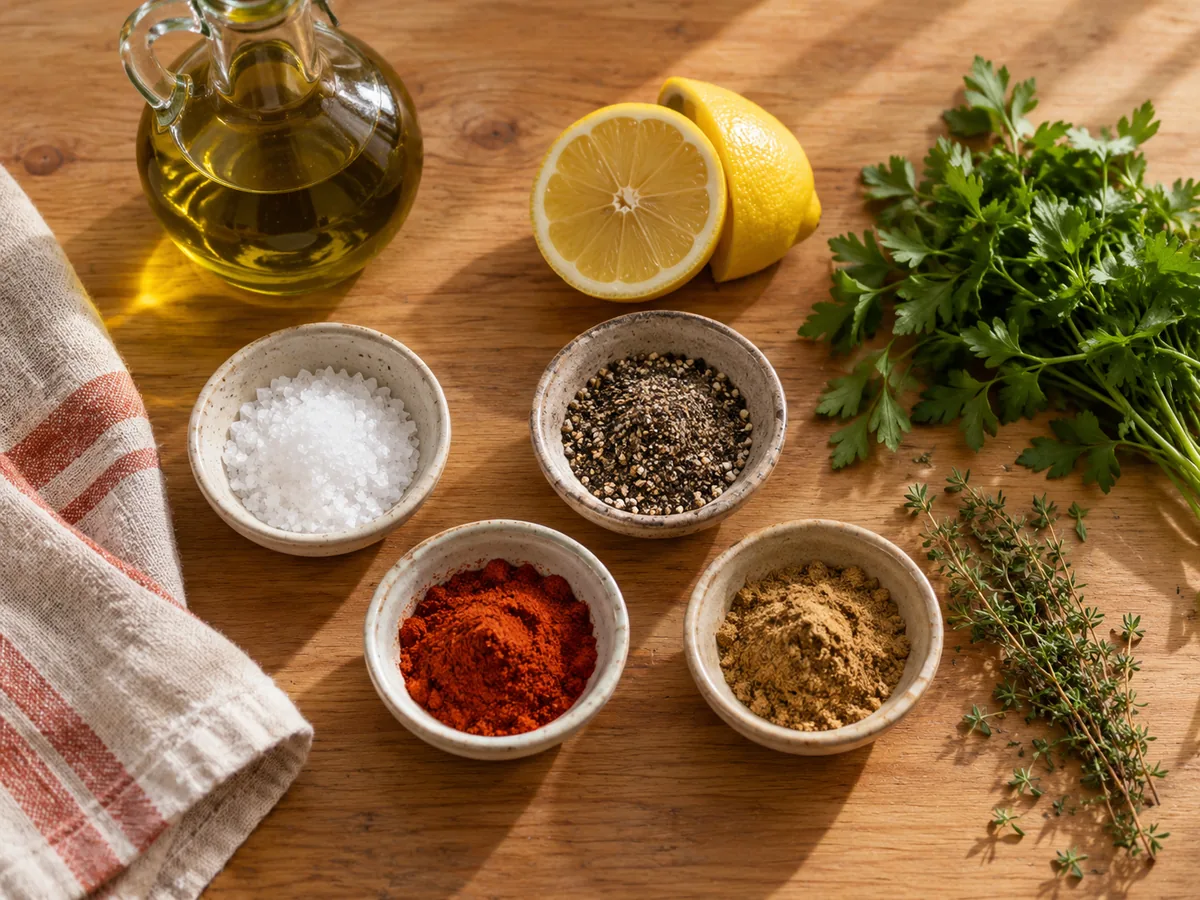
Salt, acidity, fat and aromatics: four simple tools.
Guides
Essential steps
- 01
Salt in small stages and taste before adding more.
- 02
If a dish seems heavy, a little lemon or vinegar can balance it.
- 03
Fat adds richness and carries aromas.
- 04
Add delicate herbs at the end to preserve their fragrance.
Explore
Cook something wonderful

Practical advice
Correct without hiding the flavours
Taste before salting. Try a few drops of lemon in a heavy dish or water in an over-reduced sauce. Test changes on a small portion first. Adding more spice will not fix burnt spice.
Choose the right moment
Heat curry spices briefly in oil without burning. Add basil and delicate herbs off the heat. Adjust lemon in hummus after fixing texture: adding water also changes intensity.
Plan equipment and serving
These notes complement the recipes: equipment and available space can prevent two dishes from cooking together.
Scroll the table horizontally on small screens; with a keyboard, focus it and use the arrow keys.
| Recipe | Total including waiting | Waiting included | Equipment to prepare | Planning detail |
|---|---|---|---|---|
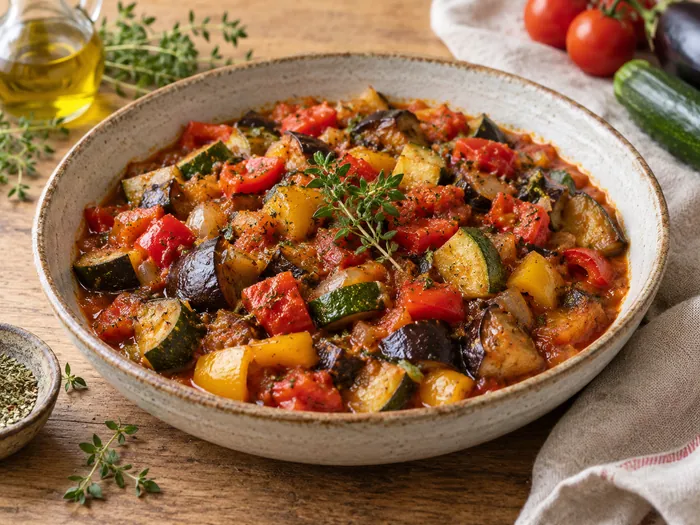
| Vegetable ratatouille | 90 min | 0 min | Saucepan · Frying pan | A rice or bread accompaniment is not included in this recipe’s time. Reserve another pan if needed. |
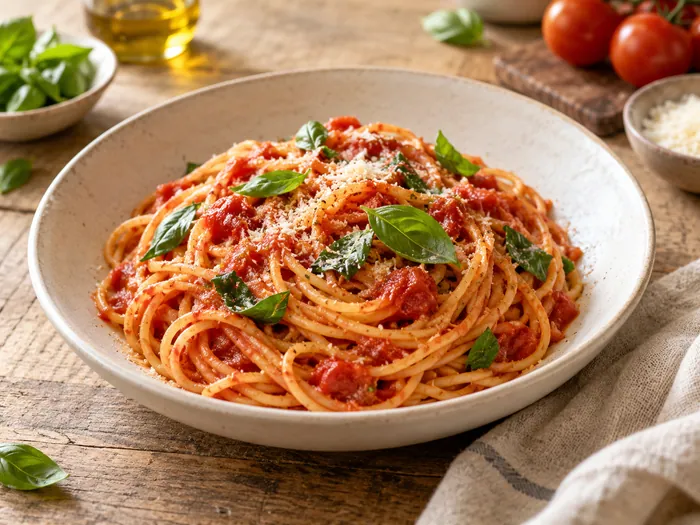
| Tomato and basil pasta | 30 min | 0 min | Saucepan · Frying pan · Colander | Reserve cooking water before draining. Finish the pasta in the sauce and serve; a long wait changes its texture. |
| Spanish tortilla | 50 min | 5 min | Frying pan · Mixing bowl | The pan stays occupied until the eggs set. Prepare the serving dish and accompaniments before this final stage. |