Ingredients

Mushrooms: texture in a broth

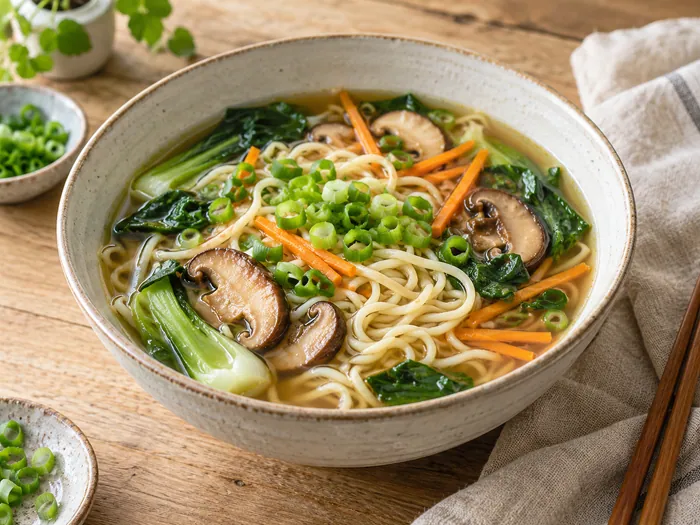
In ramen, mushrooms provide both topping texture and flavour. Slice thickness affects cooking.

Mushrooms: texture in a broth
Illustrative image

Choosing the product

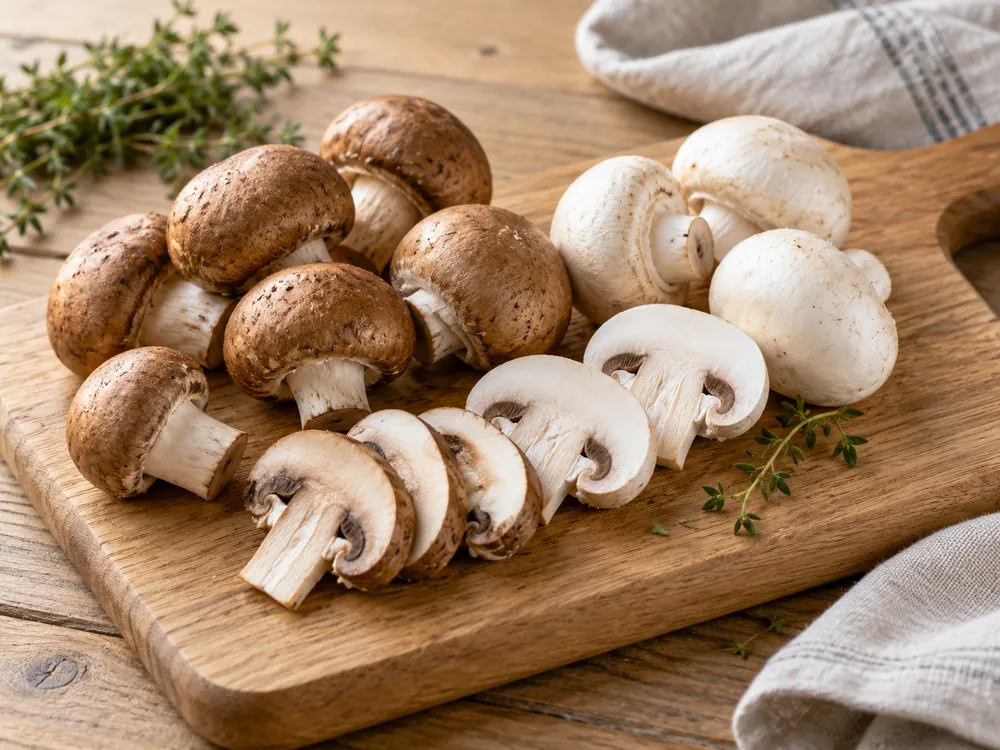
Use identified culinary mushrooms sold as food. This page cannot identify wild mushrooms. Choose sound products and follow packaging; fresh, dried and frozen need different preparation.

Preparing and using it

Clean, trim earthy parts and slice evenly. Add to broth according to thickness. If frying separately, let released water evaporate before browning.

Substitutions and adaptations

Dried mushrooms need packet preparation and give different flavour. Do not use the same weight as fresh. Frozen mushrooms release more water, so adjust broth.

Mistakes to avoid

Thick and thin slices may not finish together. An overcrowded frying pan steams mushrooms in their liquid instead of browning them.
Frequently asked questions

Why do mushrooms fail to brown?

A crowded pan holds the water released. Work in batches and let it evaporate before browning. In ramen, broth cooking aims for another texture; a browned crust is not required.

Explore further

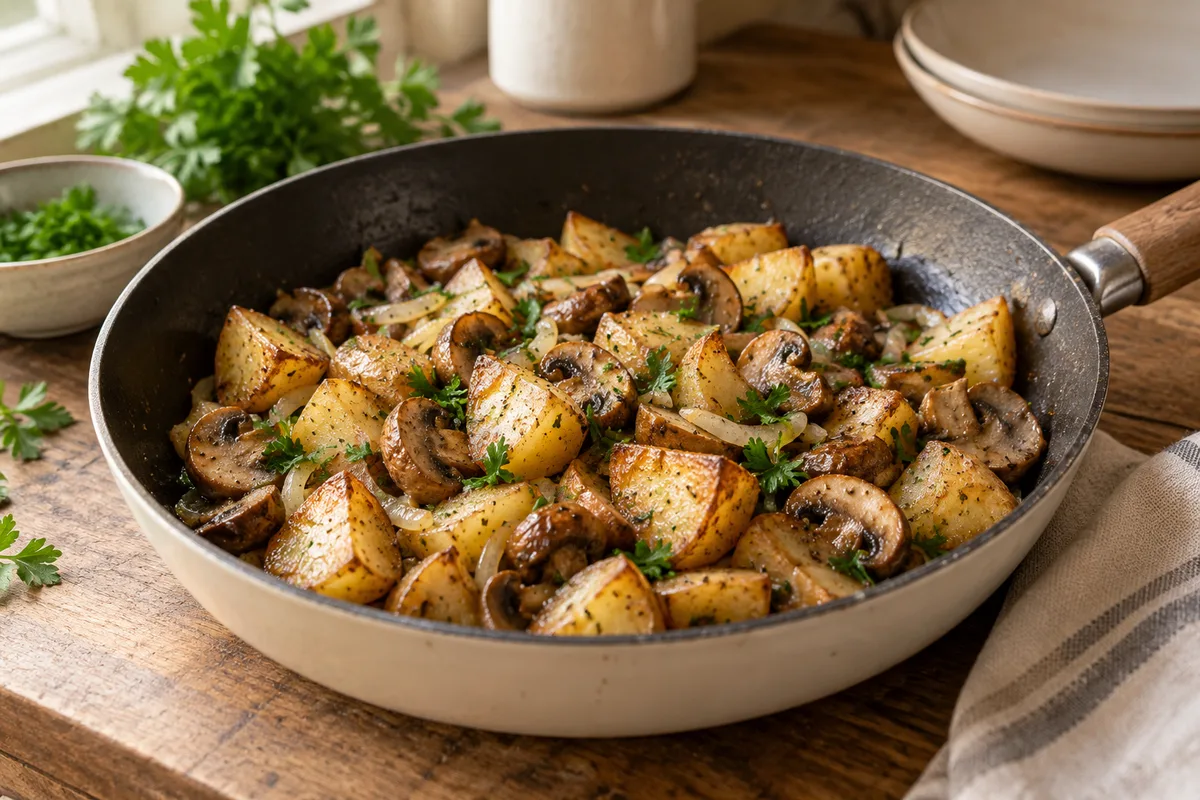
Potato and mushroom skillet

Potato and mushroom skillet

Precooked potatoes browned with mushrooms and onion, using a saucepan and a frying pan instead of an oven.

40 min·4 servings
Food composition · Ciqual 2025

Minerals and vitamins: choose the right reference

Anses average values per 100 g of edible food. Each entry describes a specific form, not an analysis of your product or recipe.

These entries describe button mushrooms. The sautéed entry has no added fat; butter and oil must be considered separately.

On a small screen, scroll the table horizontally. With a keyboard, focus the table and use the arrow keys.

Minerals, in milligrams · per 100 g
Constituent and unitButton mushroom, raw
Ciqual 20056
Button mushroom, sautéed without added fat
Ciqual 20125
Sodium (mg)3911
Calcium (mg)32.7
Magnesium (mg)10.414
Potassium (mg)364540
Iron (mg)0.310.31
Zinc (mg)0.530.81
Vitamins: check the units · per 100 g
Constituent and unitButton mushroom, raw
Ciqual 20056
Button mushroom, sautéed without added fat
Ciqual 20125
Vitamin C (mg)3.18< 0.5
Total folates (DFE) (µg)2814.3

Compare these entries and two ingredient weights

Milligrams, micrograms and missing data

1 g = 1,000 mg; 1 mg = 1,000 µg. Folates use µg; minerals and vitamin C use mg. Check units before comparing numbers.

Vitamin B9 uses only total folates as dietary folate equivalents (DFE), code 56702. Missing data stays missing even if another folate field exists. Intrinsic folates and added folic acid do not replace this total.

“<” is a bound, “trace” is unquantified and “Not reported” means missing data. None is converted to zero. A published zero does not certify allergen absence. Values describe neither absorption nor individual requirements.

French source labels and Ciqual codes
  • Champignon de Paris ou champignon de couche, cru · 20056
  • Champignon de Paris ou champignon de couche, sauté/poêlé, sans matière grasse · 20125
  • Sodium (mg/100 g) · 10110
  • Calcium (mg/100 g) · 10200
  • Magnésium (mg/100 g) · 10120
  • Potassium (mg/100 g) · 10190
  • Fer (mg/100 g) · 10260
  • Zinc (mg/100 g) · 10300
  • Vitamine C (mg/100 g) · 55100
  • Vitamine B9 ou Folates totaux, équivalents folates alimentaires, DFE (µg/100 g) · 56702

Source : Anses · Ciqual 2025. Version 1 published 19 November 2025; XML files dated 3 November 2025. Methodology · Licence Ouverte 2.0.