Ingredients

Aubergines: make the flesh tender

Aubergine needs enough cooking to lose a spongy texture. Watch both oil distribution and tenderness.

Aubergines: make the flesh tender
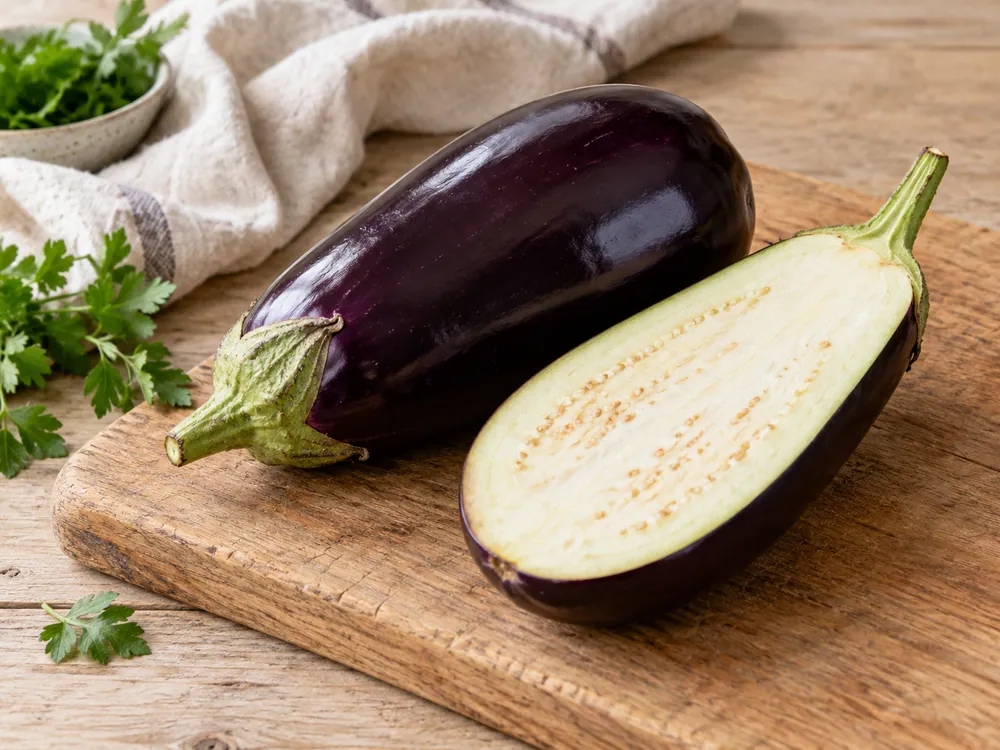
Illustrative image

Choosing the product

Choose firm vegetables with sound skin. Size determines pieces and pan space; skin colour alone cannot define a universal cooking rule.

Preparing and using it

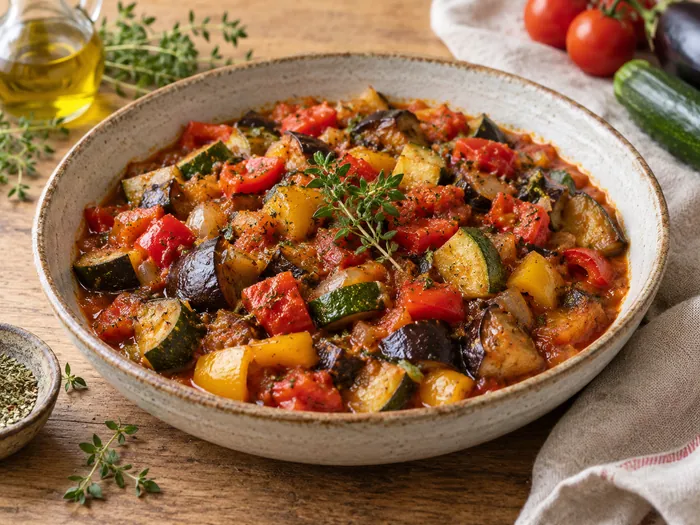
Cut evenly and brown in batches. Distribute the measured oil rather than repeatedly adding more. Test flesh with a knife, then finish with tomatoes and other vegetables.

Substitutions and adaptations

Oven cooking can prepare pieces before combining, but changes equipment and sequencing. Courgette or mushroom makes a different texture, not an exact replacement.

Mistakes to avoid

Brown outside does not always mean tender inside. Lower heat if colouring too fast. Salting in advance is not a universal requirement.
Frequently asked questions

Must aubergines always be salted and drained?

Not for every preparation. For ratatouille, even cutting, batches and cooking until tender matter most. If you salt first, pat dry and account for that salt in the finished dish.

Complementary resource

From garden to kitchen

To grow this ingredient yourself, explore its cultivation and harvesting guide.

Aubergines: growing and harvesting · Jardins Potagers France · Resource in French

Food composition · Ciqual 2025

Minerals and vitamins: choose the right reference

Anses average values per 100 g of edible food. Each entry describes a specific form, not an analysis of your product or recipe.

Raw and cooked weights are independent. Oil and other ingredients in an aubergine dip are not included.

On a small screen, scroll the table horizontally. With a keyboard, focus the table and use the arrow keys.

Minerals, in milligrams · per 100 g
Constituent and unitAubergine, raw
Ciqual 20053
Aubergine, cooked
Ciqual 20002
Sodium (mg)21
Calcium (mg)920.1
Magnesium (mg)1415
Potassium (mg)229123
Iron (mg)0.230.25
Zinc (mg)0.160.098
Vitamins: check the units · per 100 g
Constituent and unitAubergine, raw
Ciqual 20053
Aubergine, cooked
Ciqual 20002
Vitamin C (mg)2.21.3
Total folates (DFE) (µg)2214

Compare these entries and two ingredient weights

Milligrams, micrograms and missing data

1 g = 1,000 mg; 1 mg = 1,000 µg. Folates use µg; minerals and vitamin C use mg. Check units before comparing numbers.

Vitamin B9 uses only total folates as dietary folate equivalents (DFE), code 56702. Missing data stays missing even if another folate field exists. Intrinsic folates and added folic acid do not replace this total.

“<” is a bound, “trace” is unquantified and “Not reported” means missing data. None is converted to zero. A published zero does not certify allergen absence. Values describe neither absorption nor individual requirements.

French source labels and Ciqual codes
  • Aubergine, crue · 20053
  • Aubergine, cuite · 20002
  • Sodium (mg/100 g) · 10110
  • Calcium (mg/100 g) · 10200
  • Magnésium (mg/100 g) · 10120
  • Potassium (mg/100 g) · 10190
  • Fer (mg/100 g) · 10260
  • Zinc (mg/100 g) · 10300
  • Vitamine C (mg/100 g) · 55100
  • Vitamine B9 ou Folates totaux, équivalents folates alimentaires, DFE (µg/100 g) · 56702

Source : Anses · Ciqual 2025. Version 1 published 19 November 2025; XML files dated 3 November 2025. Methodology · Licence Ouverte 2.0.