Ingredients

Apples: prepare a tart filling

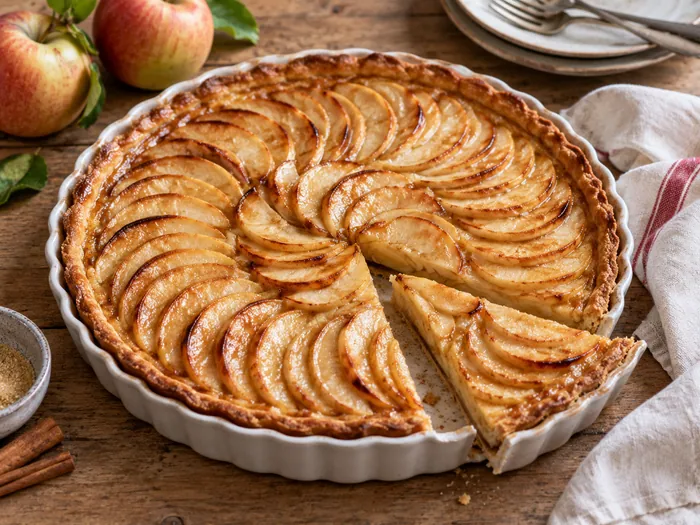
Sliced apple tart needs evenly cooked fruit without soaking the pastry. Cutting and layer thickness make the difference.

Apples: prepare a tart filling
Illustrative image

Choosing the product

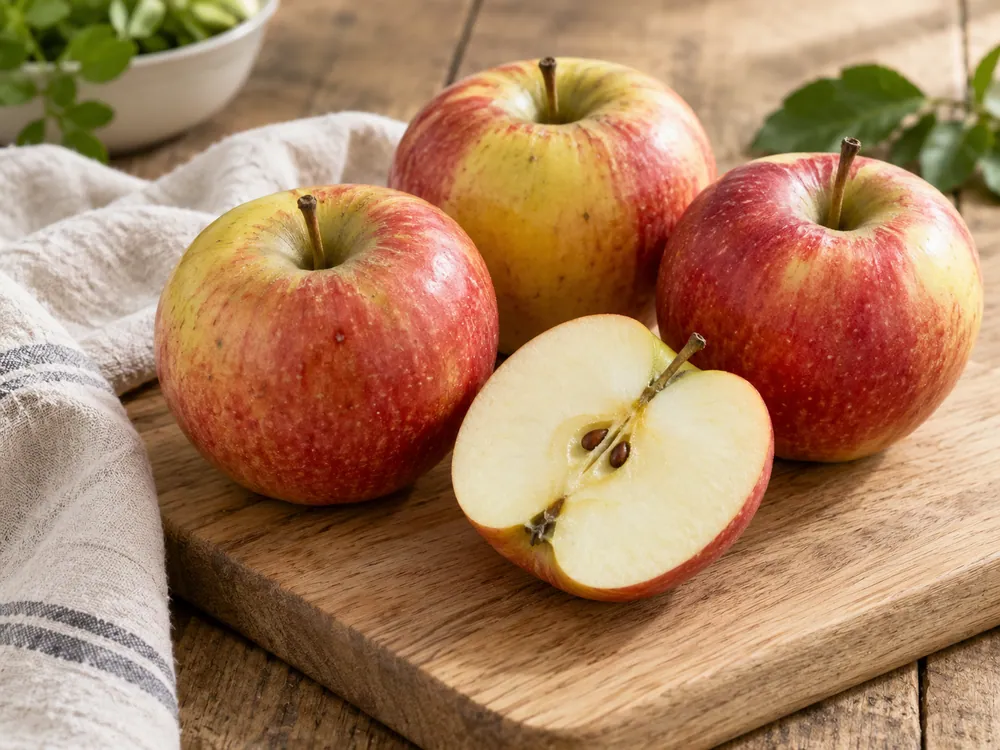
Firm apples slice evenly. Taste before adding sugar because sweetness and acidity vary. Soft apples or apple purée make a different filling.

Preparing and using it

Wash, prepare as specified and slice to similar thickness. Avoid a thick centre mound. Keep accumulated juice off pastry and slice close to assembly.

Substitutions and adaptations

Firm pears make another tart and can release more juice. Purée needs a controlled layer and another balance. Change one parameter at a time for a first trial.

Mistakes to avoid

A golden top does not prove the base is baked. Check pastry too and cool before slicing. Hot or wet filling makes neat serving harder.

Frequently asked questions

Can apple purée replace slices?

A thin layer of thick purée creates a different version. Watery purée or a thick layer can soak the pastry. Adjust the topping and check underneath instead of assuming the same baking time.

Explore further

Food composition · Ciqual 2025

Minerals and vitamins: choose the right reference

Anses average values per 100 g of edible food. Each entry describes a specific form, not an analysis of your product or recipe.

Skin is part of the entry’s identity. Added sugar, pastry and cooking weight changes in a tart or compote are not included.

On a small screen, scroll the table horizontally. With a keyboard, focus the table and use the arrow keys.

Minerals, in milligrams · per 100 g
Constituent and unitApple, flesh and skin, raw
Ciqual 13039
Apple, flesh without skin, raw (average)
Ciqual 13396
Sodium (mg)1.52.56
Calcium (mg)5.342.99
Magnesium (mg)6.473.38
Potassium (mg)119109
Iron (mg)0.0990.065
Zinc (mg)0.0310.029
Vitamins: check the units · per 100 g
Constituent and unitApple, flesh and skin, raw
Ciqual 13039
Apple, flesh without skin, raw (average)
Ciqual 13396
Vitamin C (mg)4.61.55
Total folates (DFE) (µg)37.4

Compare these entries and two ingredient weights

Milligrams, micrograms and missing data

1 g = 1,000 mg; 1 mg = 1,000 µg. Folates use µg; minerals and vitamin C use mg. Check units before comparing numbers.

Vitamin B9 uses only total folates as dietary folate equivalents (DFE), code 56702. Missing data stays missing even if another folate field exists. Intrinsic folates and added folic acid do not replace this total.

“<” is a bound, “trace” is unquantified and “Not reported” means missing data. None is converted to zero. A published zero does not certify allergen absence. Values describe neither absorption nor individual requirements.

French source labels and Ciqual codes
  • Pomme, chair et peau, crue · 13039
  • Pomme, chair sans peau, crue (aliment moyen) · 13396
  • Sodium (mg/100 g) · 10110
  • Calcium (mg/100 g) · 10200
  • Magnésium (mg/100 g) · 10120
  • Potassium (mg/100 g) · 10190
  • Fer (mg/100 g) · 10260
  • Zinc (mg/100 g) · 10300
  • Vitamine C (mg/100 g) · 55100
  • Vitamine B9 ou Folates totaux, équivalents folates alimentaires, DFE (µg/100 g) · 56702

Source : Anses · Ciqual 2025. Version 1 published 19 November 2025; XML files dated 3 November 2025. Methodology · Licence Ouverte 2.0.